Urban art in Naples: when the city becomes a canvas
Walking through Naples means passing chipped palazzi and metro stations that look like cathedrals, alleys that tell painted stories, and murals that speak of the future, identity, and resistance. It’s in the streets, tunnels, and worn walls that Neapolitan urban art finds its voice, color, and life.

A city painting itself
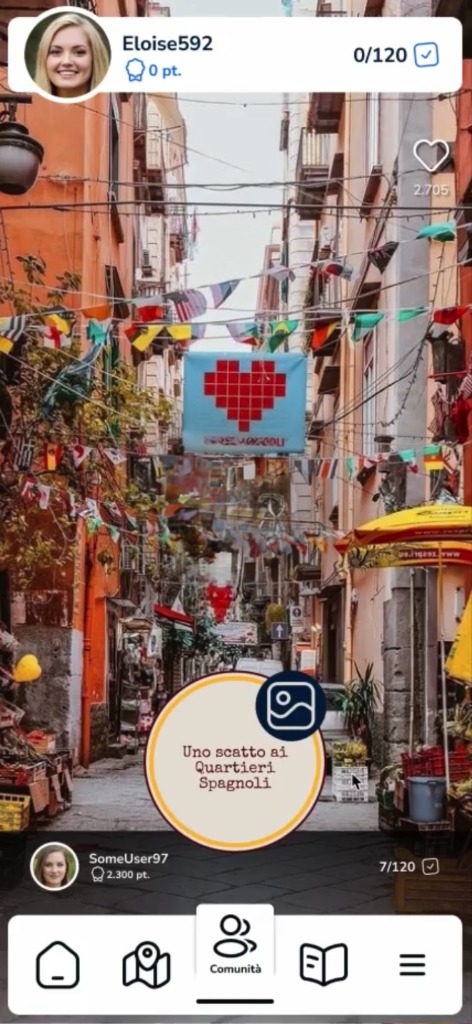
From the famous Toledo Station—named one of the most beautiful in the world, with its deep blue hues and hypnotic “Crater de luz”—to the Spanish Quarters, where Maradona’s face watches over public housing like a secular saint, Naples reinvents itself daily as an open-air gallery.
Street art as a popular narrative
Here, street art is not a borrowed language but a spontaneous, visceral response to the need for expression. Murals are open letters to passersby: tributes to the city’s icons like Totò, Troisi, and Pino Daniele, but also protests, visions, and shared dreams.
Each work is a mark of love—or anger—etched on the city’s walls.
Beyond the historic center
The suburbs too are lit up with creativity. In Ponticelli, buildings speak through monumental public art, while in Scampia, the beauty of the new school meets visual poetry. Projects like “Parco dei Murales” tell the story of a changing Naples, reclaiming itself through color.
Dialogues between past and future
In Naples, urban art coexists with baroque architecture and archaeology without fear. There’s something deeply Neapolitan in this dissonant harmony: the new doesn’t erase but layers over the old, creating an emotional stratigraphy. Each graffiti, each mural installation becomes part of a larger, evolving collective narrative.
Exploring urban art is an act of listening
No ticket needed, no guide required. Just walk. Let yourself be surprised by a painted face on a doorway, a poem etched in concrete, or a mural that turns a shutter into a story.
Because in Naples, art isn’t only kept inside museums—it’s also outside: free, alive, and just waiting to be discovered.